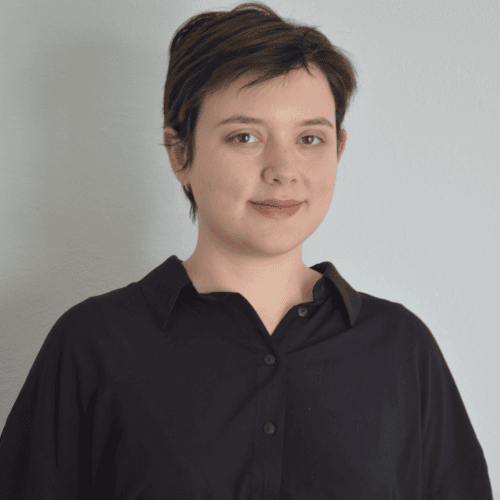
Penelope Nastou is a Senior Software Engineer at Epignosis, where she works on the Event-Driven Architecture team building the platforms and tooling that help engineering teams adopt asynchronous systems without losing their sanity. Her work sits at the intersection of platform engineering and distributed systems, focusing on making events, workflows, and developer tooling practical for real teams.
She works mainly with AWS, TypeScript, and PHP, and is particularly interested in Domain-Driven Design and CI/CD automation that improves the everyday developer experience.
When not thinking about distributed systems, she’s usually reading, experimenting with synthesizers, or planning her next trip.
When we’re building a new feature at TalentLMS, one of the first questions we ask is: what events does this produce? For complex features, we run an Event Storming session – a collaborative workshop where domain experts, engineers, and testers map out the system together on a shared digital board. But turning that model into production code has always been the hard part.
In this talk, we walk through the full lifecycle of an event at TalentLMS – from the Event Storming session where we discover it, to the Excel sheet where the team defines its attributes and schema, to the code generator that turns that definition into validated PHP classes, Zod schemas, and AsyncAPI specs. We’ll show how we eliminated a manual, error-prone process by wiring GitHub Actions to do the heavy lifting automatically.
You’ll leave with a concrete example of how to treat your event catalogue as a living contract – one that teams contribute to in plain spreadsheets, and that your CI/CD pipeline turns into typed, versioned code with zero manual steps.

A discussion of building global success and how artificial intelligence is transforming the world.
AI is transforming software development, making coding, knowledge, and execution more accessible than ever. As AI evolves from a productivity tool into the interface between human intention and creation, a deeper question emerges: what does it mean to be a capable human in the age of AI?
When a junior engineer can achieve in hours what once required years of experience, what truly distinguishes a senior professional? Is it technical expertise, or the ability to exercise judgment, ownership, critical thinking, creativity, and empathy?
This panel explores how AI is reshaping careers, learning, leadership, and human value. Where does deep expertise still matter? What skills remain scarce when knowledge and execution become abundant? And how should developers, students, HR leaders, and CTOs prepare for a future where anyone can build, but not everyone can create value?
Audience takeaway: Understand how the definition of talent, expertise, and impact is changing, and what skills will matter most in the AI-native world.
A hands-on workshop on using modern AI tools with WordPress for design, development, site management, and context-aware user experiences.
An interactive workshop examines how AI coding assistants and autonomous agents are reshaping software development, developer roles, and the skills needed to remain relevant.
A 60-minute AI-guided workshop builds and deploys an Airbnb-style booking MVP with Next.js, Tailwind CSS, and browser-based AI IDEs.
Architectural Katas give teams repeated practice designing systems, defending decisions, and learning from alternative approaches to develop architectural judgment.
A hands-on workshop using Elephant Carpaccio to practice vertical slicing, incremental delivery, and keeping software deployable through small end-to-end changes.
A hands-on workshop teaches context engineering for AI coding tools through prompts, project configuration, context management, and grounded retrieval.